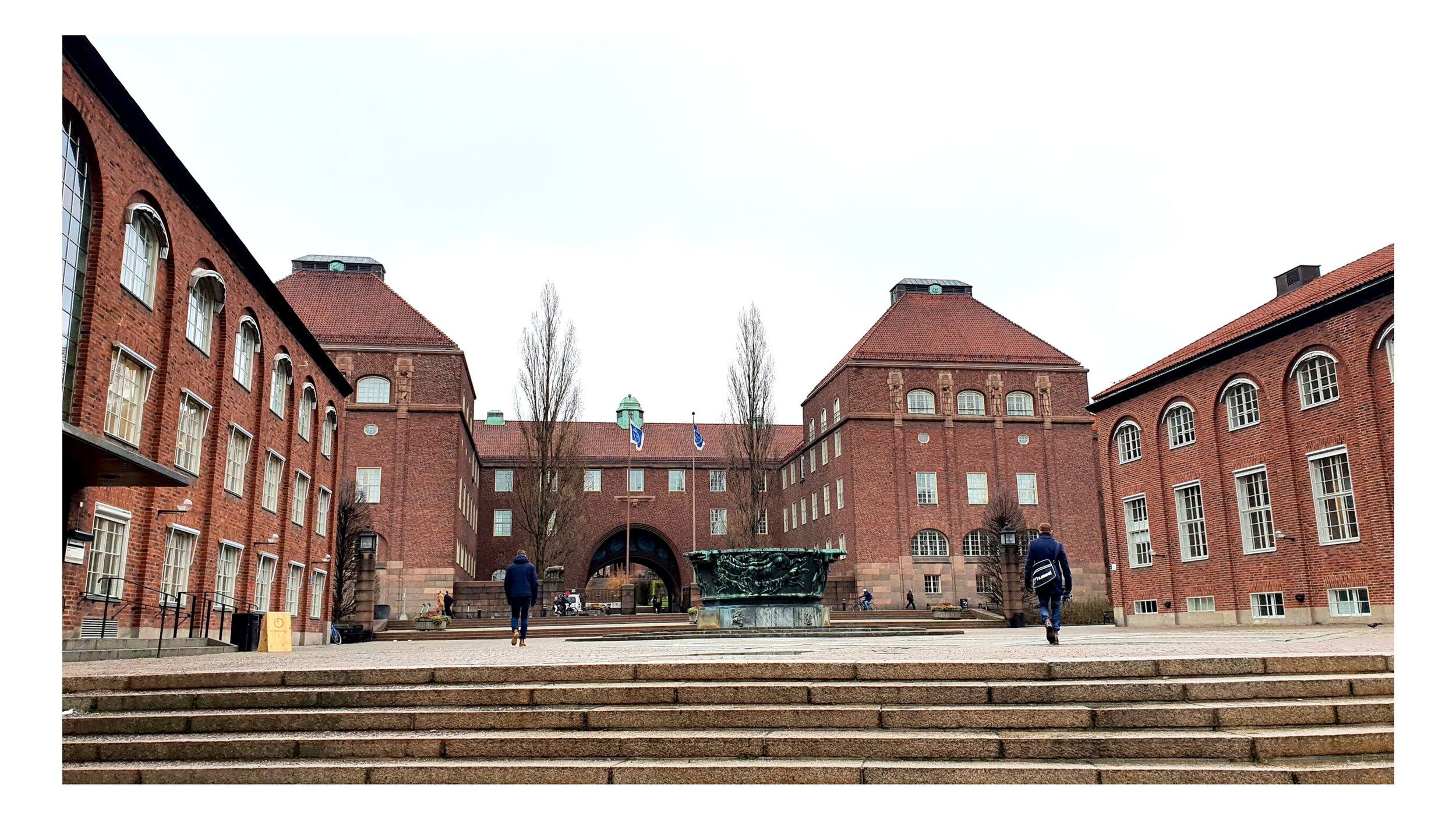
Speaking at Japanese National Museum of Ethnology

This Saturday, 13th of March, I had the opportunity to present via Zoom at the Japanese National Museum of Ethnology’s webinar series Cultural Transmission against Collective Amnesia: Bodies and Things in Heritage Practices that asks how modern heritage practice relates to memory. In its fifth and final session Transmission of Practices and Memories, I presented a paper based on my Japanese heritage and depopulation project, with a long and windy title Does World Heritage Nomination Curb the Local Regeneration and Cultural Transmission of Practices? From World Heritage Nominations of Fuji-san and Sites of Meiji Industrial Revolution.

Like at several other occasions, I advanced an argument that World Heritage Nomination can be a very beneficial instrument for sites that are losing their vitality and have already a reduced repertoire of use. For other, more vital sites that have hitherto functioned as centres for communal life and identity, the inscription may be less beneficial, because many of the practices and uses that are not directly related to the Outstanding Universal Value may become restricted. Community’s right to develop the sites in a way that reflects their shifting identity may also become restricted.

The webinar series is to become an edited collection in English and I hope that for once I will be able to find the time to write.

Sekiyoshi sluice gate. No more swimming here.

Sekiyoshi sluice gate. No more swimming here.

Digital teaching, autumn volume: clicking away

The silence and frequency of posts on this site has been a function of the bad health of my arm, shoulder and wrist. Already the abrupt digitalisation in spring had a go on it, but summer, varied activities and some nice lake swimming helped to avoid the worst. The spring course was work intensive but the student numbers were small, so most of energy went still to the course itself - recording lectures and student interaction.

The autumn teaching was very different and far more devastating on my shoulder and arm than spring for several reasons. While it was less work contents-wise (I gave only some lectures and seminars), it was very heavy in terms of teaching administration, most of which could essentially be done with someone without a PhD. In the following I would like to shortly rant on the hidden side of the Learning Management Systems (LMS) which, like many other digital and administrative obligations, the teaching faculty simply has to swallow - and sometimes pay with their arms and wrists. I say: every click counts, they consume time and muscles, and when we account for our work achievements, we never count how many hours we have spent on futile clicking in the mediocre IT-systems we wrestle with. And so you click away your days and elbows.

I am relatively old to digital teaching. I did my first 100% online course back in 2007 when WebCT still was the thing (long before it merged with Blackboard). It had its flaws and many of them are surely unknown to me as I do not need to engage in system maintenance. It relied heavily on Java and I even edited some parts of it in html - you could do otherwise too, but that gave me more flexibility. The course environment was surely not very light, neither did it have advanced accessibility features. The possibility to use it across platforms and devices was not a thing back then. Yet, the interface was extremely intuitive. The visual language corresponded to the general visual competence of the students. Setting up quizzes and tasks was easy - after a test run you would have discovered the errors in the quiz setup without problems, but they hardly ever occurred. That said, I seldom ran multiple choices or true/ false type of quizzes, because they do not reflect well the deeper learning objectives in humanities. And I drowned in correcting the open question assignments. Learning Management Systems offer very few automatic grading options for the type of knowledge we grade in humanities, but teaching in Estonian made this even worse: if you ask for one specific term from the lecture materials, the students can still theoretically present it to you as a grammatical verb, adjective or a noun in all its 14 singular case forms! The quizzes are really not made for agglutinative languages. I must have got something right, though, because I got Estonian E-learning Quality Award for that course.

KTH uses Canvas. It is an open-source LMS which can be run from the institution’s own servers and has certainly a multitude of virtues from the point of view of a system administrator. But it is unintuitive, old-fashioned, and most importantly, depends on local administrators on which functions and updates they run, while technical support is in forums and external pages. I’m not entirely sure, but I think Canvas is run in most if not all Swedish Universities. The fact that all teaching platforms need to be purchased through central contracts through lengthy and painful processes and that the updates or extensions to the existing products need to be either separately purchased or installed by someone on ground (in cloud-based services the updates come from the central developers), means that we did not really get any benefit of the impressive development that LMS-s have gone through this year. CANVAS’ flexibility is that of a fossilised mammoth and its interface old-fashioned and unintuitive, more like Windows 3.0 than the 21st century high-tech learning systems. If it is your first time to make a false/right type of quiz, odds are that you do it wrong. For students who have grown up with icon-based layouts of tablets, this is like yesterday.

But worst of all: the clicks. I knew already that automatic correction is not an option, so we tried to create quizzes and tools that had answer sheets already incorporated to them, so that students immediately found out what was the right answer. In this way the students’ learning did not suffer if we did not manage to check the quizzes quick enough, which we knew we would not be able to do. The quizzes would therefore be graded Pass/Fail - it is important that they do them and learn in the process. Nevertheless, there was no way to automatically mark them as ‘pass’ - you would still have to click through the tests. “Energy Systems in Society” that I was giving, is in fact two different courses with different codes, meaning that I had two different course environments and content had to be transferred from one to another and synched (they could not be joined for administrative reasons). All in all 90 students. Now imagine that you have one test that would take in average 5 clicks to grade. Already this one test is 450 grades plus at least 180 scrolls, but this does not include the clicks needed to come to the grading system and for double-checking stuff. When we are in the classroom, we have 8 joint lectures for the two sets of students - no clicks or scrolls included. Digitalisation of homework for these lectures last year brought ca 90-180 clicks per lecture last year. But full digitalisation became a clicking nightmare: 1 full lecture was replaced with 2-3 small videolectures with added tasks plus a reading comprehension exercise for which we decided to use an external tool Nearpod - in theory fully compatible with Canvas, in practice never included in our Canvas bundle, even when we asked for it. This means that we had in total 20 small films with tests that had to be clicked through for grading: roughly 20x90x5=9000 clicks. Plus hand-reporting results from Nearpod to Canvas, a great number of clicks and scrolls even here. Nice! But this is not all.

Unfortunately Canvas is a LMS that is mostly meant for blended learning, not full digital teaching. It’s compatibility with synchronous teaching is limited. Yes, you can embed a link to a Zoom session and hold the lecture and then even record it and even upload the recording. But here its functionality ends. It is not very useful for the kind of work we do and leads to a lot of handicraft and crazy clicking. We have four seminars where students have to submit assignments beforehand and then give peer feedback to each other in the class. Very classical setup. Except that these are two course codes - and we cannot ascribe peer review across courses. Then we need to divide the 90-people crowd into 5 seminar groups and that is easy with Canvas - it creates random groups. But once they submit their INDIVIDUAL assignments, it becomes complicated. You can not divide peer review tasks only within the selected seminar groups. Even worse, the random attribution of peer reviews is not compatible with the Breakup-rooms function on Zoom, because it does not form groups of three. It can assign the essay of A to X, Y and Z, whereas the essay of X will not be assigned to A, but K, L and P. So if you want to make them work in the break-out rooms, you would have to hand-attribute the essays. If everybody has 2-3 works to read, it makes 4-6 clicks per person (so ca 500 on average per seminar) plus endless scrolls back and forth though the list of 90 students. This is a humble estimate because in reality you would also want to know if the students have actually submitted their assignments and are likely to turn up for the class - and this is done in a different part of the system. It is easy to make a mistake, because you are yourself making up the groups and some names are very similar. Every time you assign a task to student, they get a notification: if you click wrong, they get many notifications, and you have no power over this function. Then you would need to program the breakout groups in Zoom or set them up manually according to the list that you’ve made. A real clicking spree that ends up with your elbow spitting fire. I used two different mouses and a mouse pad and a tablet with a pen, and yet it hurts. Do I need to say that I made mistakes?

This is only the easily quantifiable part of clicking and handicraft hidden in these softwares which could easily be automated. Perhaps Canvas has it but we don’t. It is even a possibility that the functionality is hidden somewhere and I couldn’t find it. After all, online teaching has been dominated by lack of time to slowly go through all the world’s tutorials and forums on one hand, and it is not an intuitive system on the other hand. If a person with 13 years of experience in multiple systems cannot find it, then the function s virtually non-existent, even if there is some hidden way to do it. Add here the requirements to make all materials accessible to those with hearing impairment and dyslexi, and very little energy is left over for the actual contents of the course. It is easy to add one small requirement to teachers from the central level, but I doubt that anybody has ever dimensioned the demands that editing machine-generated captions puts on teachers and the time it takes. I’m lucky to have experience with many online teaching platforms and caption generation from before, but what if this is your first course? And you had planned to give it person because that’s what the university leadership had decided, but now had to re-plan everything? Students who do not meat real teachers in flesh are more anxious than normal. The questions that they could ask informally in the break before the seminar, need now to be handled through E-mail. This is a lot of keyboard time. Such hidden clicking time is included in all platforms we use institutionally and they are many, partly doubling each other’s functions.

I’m lucky because I still get paid for those hours I spent on the courses and I get to go to the physiotherapist three times for free (not that it cures by now a chronic issue). But my elbow and shoulder spit fire and I haven’t published much and applied for a lots of funding which are the activities that decide whether or not I have a job in coming years. Not my ability to click well.

Swedish rescue expedition in Antarctica, 1902

In the Melting History blog, I have translated some snippets of the materials of the Swedish Rescue Expedition that is known to be the first expedition to land at Snow Hill after Nordenskjöld and his team were evacuated by Captain Irizar and the Argentine Navy. Since there was no glorious rescue, the expedition is little known, yet the descriptions and the photo material held at Sjöhistoriska Museet is fascinating.

The Swedish Rescue Expedition Landing Anniversary - MELTING HISTORY

It is not only the Argentines who sent a rescue expedition - Sweden, too, sent out their boat that was supposed to collaborate with corvette Uruguay and carry out rescue works together. But Captain Irizar maintained that by October 25th, 1903, he had still not received a confirmation about the whereabouts of the Swedish rescue mission and as he was concerned for the time passing, he had decided to venture to South on their own, eventually rescuing the entire Nordenskjöld’s expedition. The Swedish were clearly not happy about not having anyone to rescue and were not treated particularly kindly after their return in Sweden. It was considered shameful that men from the warmer latitudes, who “had not seen ice anywhere other than in their cognac or whiskey glasses”, would have got there first.

Lahemaa Military Heritage Days videos are out

The video recordings from the Lahemaa military heritage days are finally online as a Youtube playlist for everybody to look and listen. Three days cover a variety of topics from the general outline of the defense systems during the Cold War, the infrastructures of the Hara-Suurpea complex, but also everyday life in the border restriction zone. Most of videos are in Estonian, with the exception of the talk by Aleksandr Zaitsev, the diver who worked at the bottom of Hara Bay, who speaks in Russian.

Winter at Esperanza Base

Winter has come to Esperanza Base.

Here I share some photos sent my dear friends overwintering there and an excerpt from Duse’s eloquent memoirs.

Winter at Hope Bay - MELTING HISTORY

We can only imagine what it meant to spend a winter in this hut. Samuel Duse writes: The worst was during the periods of rough weather when we were forced to stay inside the artificial polar darkness of the stone hut, not disturbed by a single ray of light - perhaps only when a heavier storm tore open the ice plaster in the roof.

BALTEHUMS cancelled

Sad news but nothing we can do about it: today we notified all our participants that the  Second Baltic Conference on the Environmental Humanities and Social Sciences (BALTEHUMS II) that we had postponed to October 1-2, 2020 due to the pandemic, will definitely be cancelled.

COVID cases are going up, university and travel restrictions getting worse by day. More than half of the participants would not be able to get there and BALTEHUMS is a networking event, so online version would not really do. I am pretty sure I am not the only one suffering from Zoom fatigue.

We have also decided not to postpone for 2021. It is already packed with conferences, one for every week! And there is no real guarantee that something will be better by that time. Instead, we are hoping to hold BALTEHUMS II in 2022. Long time to go…. Meanwhile, we hope to have a BALTEHUMS social event in ESEH program and perhaps some other smaller events along the way, digital or not. KAJAK Facebook page keeps publishing regional updates about the events we hear about.

And I was so much hoping to see Kaunas and the amazing water reserve.

Writing in Estonian about our expedition

Writing about CHAQ2020 for the Estonian magazine GO Reisiajakiri.

Antarktika lummuses - Go Traveli reisikirjad

Semiootik ja keskkonnaajaloolane Kati Lindström kirjeldab Antarktika reisi Rootsi-Argentina ekspeditsiooni raames, mille eesmärk oli uurida, millist mõju avaldavad kliimamuutused Rootsi-Argentina ühisele kultuuripärandile. Saame teada, kuidas on Antarktikas telgis ööbida ja mida tähendab kuulus Antarktika vaikus tänapäevases tähenduses. Kui meie ekspeditsioon veebruari algul Argentina majandatavasse Esperanza baasi jõudis, oli koroonaviirus veel rassismihõnguline nali.

1 week to Lahemaa Military heritage Days!

In Estonia, the military and ecological heritage of the border zone has been extensively mapped by Prof Kalev Sepp and his group at Estonian University of Life Sciences. But much less is known about the lived experience of negotiating these border zones and off-limits areas.

Read More

Advancing with ColdWar Coasts - a military heritage event in Lahemaa planned for summer

Now that Estonia is out of quarantine and public events allowed, the time has come to make plans for summer. ColdWarCoasts is starting an ambitious collaboration with Ave Paulus from Environmental Board of the Republic of Estonia for gathering oral histories in the border zone in today’s Lahemaa National Park.

Read More

Presenting in "Petersburg" today: Polar readings 2020

Together with Tayana Arkachaa, I will be presenting “Who Wants the krill “Schnitzel”? Researching and Using Krill in Soviet Union and Japan” at the Polar Readings conference today. The conference was supposed to take place in St Petersburg between May 18-21, and was now taken online. Alas, the duration of the talk was reduced from 20 to 10 minutes together with the digitalisation of the conference, so Tayana gets to do the speaking in Russian. The conference is also streamed on YouTube, through the next three days. Tayana and I will present today at 13.00 Moscow time.

The contents we can cover in such a short time will inevitably be very limited but it has nevertheless served me to dig into my krill materials. The title alludes in fact to the Polish campaign of developing krill schnitzel, whereas nothing so spectacular was ever produced in the Soviet Union or Japan. However, looking closer at the numbers of krill fishing, I was struck again by the deeply ingrained racism in the discourse around Antarctica. From time to time, articles like this warn us against Russian and yellow peril in Antarctica. What is typical of texts like this, is that they mix Arctic and Antarctic in swift discursive turns and seldom have any good data about the countries that they suspect of wanting to take over Antarctica for resource extraction. I’m not saying that China or Russia are NOT interested in natural resources in the Antarctic. However, I don’t think they are interested in resources any MORE than all the other states of the Antarctic Treaty. No country has gone down there to simply enjoy an icy landscape. Yet, we never read articles of what is Norway up to in Antarctica, whereas it is the country that fishes up most krill. If Russia essentially stopped krill fishing after the fall of the Soviet Union and Japan stopped krilling in 2012, then Norway’s krill fishing has been on increase year after year. In 2018/2019, Norway fished 245 014 tons of krill, compared to the 2nd biggest krill fisher, China, who came home with 50 423 tons - five times less. Yet, articles like the one linked above, keep asking about Chinese interest in marine resources of the Antarctic. And yes, Russian colleagues at the conference have just confirmed that the Arctic scientific program of this year had to be downsized because they cannot get their people out. But Norway, what is Norway up to? Not having looked into the Norwegian materials closer, i can only guess that the culprit is the nice and pink salmon on your lunch plate - krill is an excellent feed in aquaculture, particularly for red meet fish, because krill makes their muscles even pinker.

Visiting Helsinki Environmental Humanities Hub ....1 year ago

Those were the times…. When one could still travel and give a talk! Exactly one year ago I presented my research on Mt Fuji World Heritage in Helsinki.

The presentation “Nature or Culture? Negotiating Outstanding Universal Value of Mt Fuji in the Japanese World Heritage Nomination” can be watched on their Twitter account.

Our exhibition at the Estonian National Museum in focus again

Reconstruction of the plague doctor mask and a modern protective gear for infectious diseases. Perhaps it is good that the museum is closed right now - these protective suits are a very priced commodity right now.

Reconstruction of the plague doctor mask and a modern protective gear for infectious diseases. Perhaps it is good that the museum is closed right now - these protective suits are a very priced commodity right now.

During 2015-2016, I had a privilege to work together with my colleagues from KAJAK, the Estonian Centre for Environmental History, and Estonian National Museum on a part of their new permanent exhibition on humans and environment. The part that I was responsible for, was a display on health and environment in Estonia in a historical perspective. Then it was a nerd choice in many ways - today it is in focus again. From the beginning of the epidemics, the images of our plague mask replica started spreading on social media. Yesterday, Alar Karis, the director of the Museum published a blog post on our materials related to small-pox mortality and early vaccination in Estonia.

Small-pox part of the display was in many ways exciting. Materials on small-pox vaccination campaigns were in many ways abundant but to grasp and visualise the context in many ways rather difficult as they principally consisted of books filled with the names of the vaccinated. But then there was an original knife for vaccination, as well as books that instructed how to do it - vaccination was carried out by local pastors, making thus sure that the vaccines also reached the remotest parts of the country. To convey that feeling and the process, we even staged a short film (freely watchable on youtube). Arguments against people who did not want to vaccinate their children remain eerily relevant for today. For a long time, we were searching for a photo of somebody with small-pox scars, but even Stalin’s photos are all retouched. In the end, University of Tartu’s History Museum found a scary series in their collection where you can see the deterioration of a small-pox patient day by day.

A man with small-pox on the 4th and 8th day of being at Tartu University Hospital in 1920s(?). I’m not sure he had a 9th day… TÜ Muuseumi fotokogu, nr ÜAM F 445:107/5 F

A man with small-pox on the 4th and 8th day of being at Tartu University Hospital in 1920s(?). I’m not sure he had a 9th day… TÜ Muuseumi fotokogu, nr ÜAM F 445:107/5 F

rouged+8+paev+%282%29.jpg

Choosing diseases that would be displayed at the exhibition was not so easy either. 1812 plague was something that we definitely wanted to include, but finding original objects from a disease outbreak more than 200years ago that had killed close to 80% of the population in some parts of Estonia, is very challenging. Since everybody was busy with surviving, nobody had time to actually keep track of how many people died, and most objects were destroyed, our knowledge is very scarce. In the end, the plague outbreak was represented with a short film of the archaeological excavation of Tallinn’s Santa Barbara graveyard and a running list of people who died of plague in Tallinn that keeps running and running without an end in sight. And the mask, of course, even though we have no historical documents that prove that exactly this was the design used in Estonia at that time.

This is not all of what we managed to fit into the small space dedicated to environmental history of epidemics in Estonia. There is water contamination by disposed medicine, development of quinine, emergence of sterilisation and hospital hygiene, and folk medicine, among other things. In the course of preparing it, I got to see the amazing medical and pharmaceutical collections of the Tartu University History Museum and stocked up a whole pile of material on other diseases that never made it to the exhibition and keep waiting for me to write about them.

Variatsioonid variolatsiooni teemal ehk „ilusad tüdrukud saavad paremini mehele kui rõugearmilised"

ERMi direktor Alar Karis. Ajal, mil uus viirushaigus on alustanud inimkonna proovile panemist, on arusaadavalt huvi selle teema vastu kõrgendatud. Selles blogiloos ongi jutuks nakkushaigused, täpsemalt võitlus rõugete vastu. Karmim haigus, mis omal ajal eestlasi maha niitis leetrite, düsenteeria, koolera, tüüfuse, sarlakite, malaaria ja rõugete kõrval, oli kindlasti katk.

An article on Estonian boundaries and theory of culture

Some things take a really long time to come out.

Finally, everybody can HERE read a collection of articles on the Theory of Culture, where I have been contributing to one text on boundaries in space and time in the last 100 years of Estonia. I appear as a last author in some kind of quasi-science type of author listing, since I actually worked quite a bit with the manuscript, most of all the theoretical and background parts though.

It is quite a heavy reading, I think, but for me, an important one as well. It shows quite well how material and discursive borders do not always overlap, neither in time nor in space. The changes occur at different speeds in different spheres of culture, thus, for example, the discursive reality can be entirely Soviet, while the economic production, landownership or everyday practices can be still very much behind in the pervious economic order. Practices can maintain old boundaries long after they have been officially erased from the maps or history books.

Some texts grow old while you keep waiting for them to get published. “Plurality of pasts and boundaries: evidence from the last hundred years of Estonia“ has aged relatively well. Even the opening vignette on the EU/Estonian border with Russia reads well amidst the new rhetorical and physical closing of borders in Europe over the last months. How many of those borders that have been closed now are actually physically closed?

Raili Nugin, Tiiu Jaago, Anu Kannike, Kalevi Kull, Hannes Palang, Anu Printsmann, Pihla Maria Siim, Kati Lindström. 2020. Plurality of pasts and boundaries: evidence from the last hundred years of Estonia. In: Anu Kannike, Katre Pärn, Monika Tasa (eds.), Interdisciplinary Approaches to Culture Theory. Tartu: University of Tartu Press, pp. 334-373.

Cold War memories revisited in the Estonian island lockdown

BBC has prepared a video clip about the island of Saaremaa and I discuss on the Cold War Coasts blog why this brings back the memories of the Cold War.

Estonia's 'corona island' a flashback from the Cold War

BBC.com featured today a video piece on "Estonia's 'corona island'", as they put it, that is, island Saaremaa that finds itself completely cut off from the mainland under the harsh COVID-19 measures taken in Estonia. Whether or not it is nice to label an island a 'corona island' because there are many diagnosed cases, is...

Teaching online

This spring term I am teaching one course - History of Science and Technology - which I was very much looking forward to. Now it had to be put online almost overnight. On Friday, March 5th, the guidelines still said that teaching goes on as normal, on Monday, March 6th, it was decided that all teaching has to be online. On March 7, it was our first classroom meeting, which now had to be taken online overnight.

Teaching online is not really a new thing to me. I taught Landscape Semiotics at the University of Tartu 100% online between 2007-2010 and 50% online between 2010 and 2012, long before today’s Zoom appeared. Even got an award for it. One thing that these years taught me, is that online courses take so much more work than normal seminar-based courses. It is so easy to overdo assignments, and yet you have to build in a reading comprehension check everywhere, you need to constantly see that people hand in all they need by the time they need to. These days, it is particularly demanding: students may fall ill, others have been called back by the home universities half way into the term, and then I need to build in a possibility for myself to fall really ill and not be able to do anything. It has taken some work to get this running but all in all I think it is fun. Some of the topics, such as health and theories of contagion, or science denial are more urgent than ever.

To avoid people on the other side of the zoom screen from getting distracted by my wall or kids who flash by, I have set up a digital background: a cool picture that I took of the Esperanza base in this February. It felt quite professional to speak about the post-WWII financing of big science and the development of climate science on the background of an Antarctic base.

Applause to everyone who can keep concentrated during the endless Zoom meetings. I can’t keep my eyes off other people’s bookshelves,. for example. To hide mine, I’ve put up this screen. If I’m boring, you can try and count the penguins.

Applause to everyone who can keep concentrated during the endless Zoom meetings. I can’t keep my eyes off other people’s bookshelves,. for example. To hide mine, I’ve put up this screen. If I’m boring, you can try and count the penguins.

BALTEHUMS II postponed

While we were sifting through the submissions to the Second Baltic Conference for the Environmental Humanities and Social Sciences (BALTEHUMS II) and were ready with the acceptance decisions, it became gradually clear that the situation with the COVID-19 pandemic has made it impossible to hold the conference on the planned dates. So the Local Organising Committee and the Programme Committee have been trying to come up with a solution.

For the time being, we decided that it will not be an online conference, because one of the main purposes of BALTEHUMS II is to get to know each other and network, to find new collaboration partners. Online papers do not help you with that. Kaunas University of Technology has preliminarily offered to host the conference in the first days of October. So we have decided to postpone BALTEHUMS II to October 1-2, 2020. It will still be held at the Kaunas University of Technology, Faculty of Social sciences, Arts and Humanities, hosted by KTU’s dynamic Civil Society and Sustainability Research group. Keep your eyes on the conference Facebook Event or its website for updates.

At this moment we are planning to re-open the call in late summer to invite those for whom the original dates were inconvenient. Those who rejected will also have a possibility to update their abstract at that occasion or submit a completely new abstract for review instead.

Just as we had laid down the plans for a social program at Kaunas’ vast water reservoir under which many submerged villages lie, the conference had to be cancelled. October is not quite as nice as May but we hope to be able to hike there anyway! Pho…

Just as we had laid down the plans for a social program at Kaunas’ vast water reservoir under which many submerged villages lie, the conference had to be cancelled. October is not quite as nice as May but we hope to be able to hike there anyway! Photo: By Creative, CC BY-SA 3.0

Contributing to the museum of Esperanza Base

I have written a post on CHAQ2020 expedition’s contribution to the museum of the Esperanza Base. See here

Contributing to the museum at Esperanza Base - MELTING HISTORY

Kati Lindström blogs about designing posters for the museum at Esperanza, one of the southernmost museums in the world. How to design an addition to a museum that you have never been to? A museum that is among the most austral ones in the world, where you cannot go to think, rethink, measure and measure again?