Anthropocene Heritage goes United Nations
Most protected heritage sites on this planet are profoundly shaped by the Anthropocene. The processes that so profoundly shape the Earth Systems are the same ones that constitute a threat and endangerment to our commonly cherished cultural and natural sites.
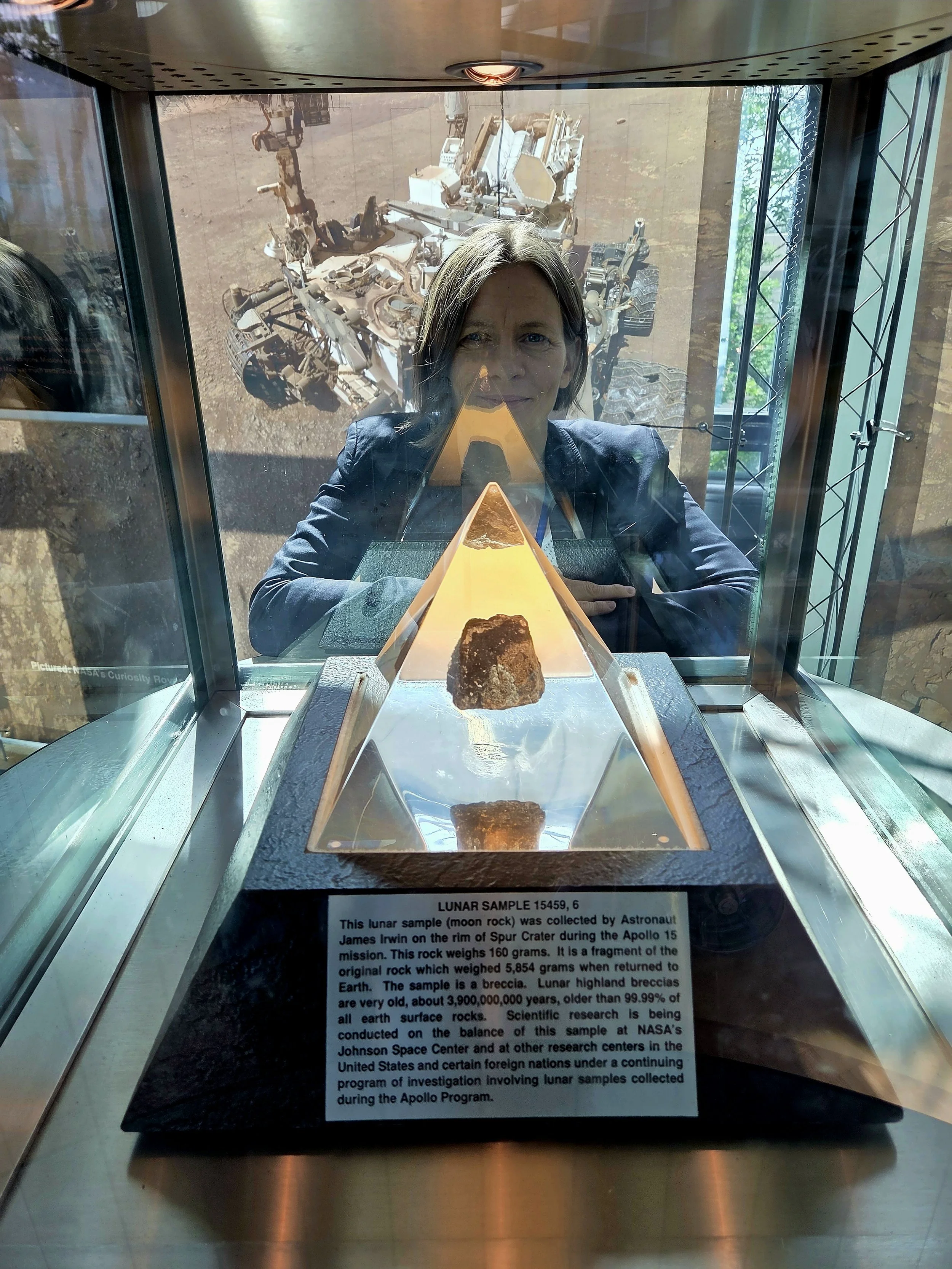
With a piece of space heritage - the moon rock - at the United Nations headquarters in Wien.
At the same time - there is also Anthropocene heritage in a narrow sense: heritage that has been shaped by studying and attending to the global earth system change. Such is the heritage left behind by big science in Antarctica, the laboratory of Earth system change, as well as the historical remains of human activities on the Moon.
On June 15, 2026, I was invited to talk about the protection of Antarctic heritage at the 69thsession of the United Nations’ Committee on the Peaceful Uses of Outer Space (COPUOS) in my capacity of the vice-President of the ICOMOS International Polar Heritage Committee. At a side event organised by the UN International Committee for the Monuments and Sites (ICOMOS), the international space delegates had a chance to hear about the protection of historically valuable sites in areas beyond national jurisdiction, and discuss what a protection regime for Lunar monuments and sites could look like.
The publicly available non-paper presented by the speakers, including myself, outlined the specifics of the Antarctic Treaty heritage regime and a possible setup for future lunar heritage protection.
This was also my first UN event to participate. I have by now been at four ATCMs, but the scale and the dynamics of the room with all the NGO and observer participants are something completely different.