SEAL! - a seal of quality in polar education
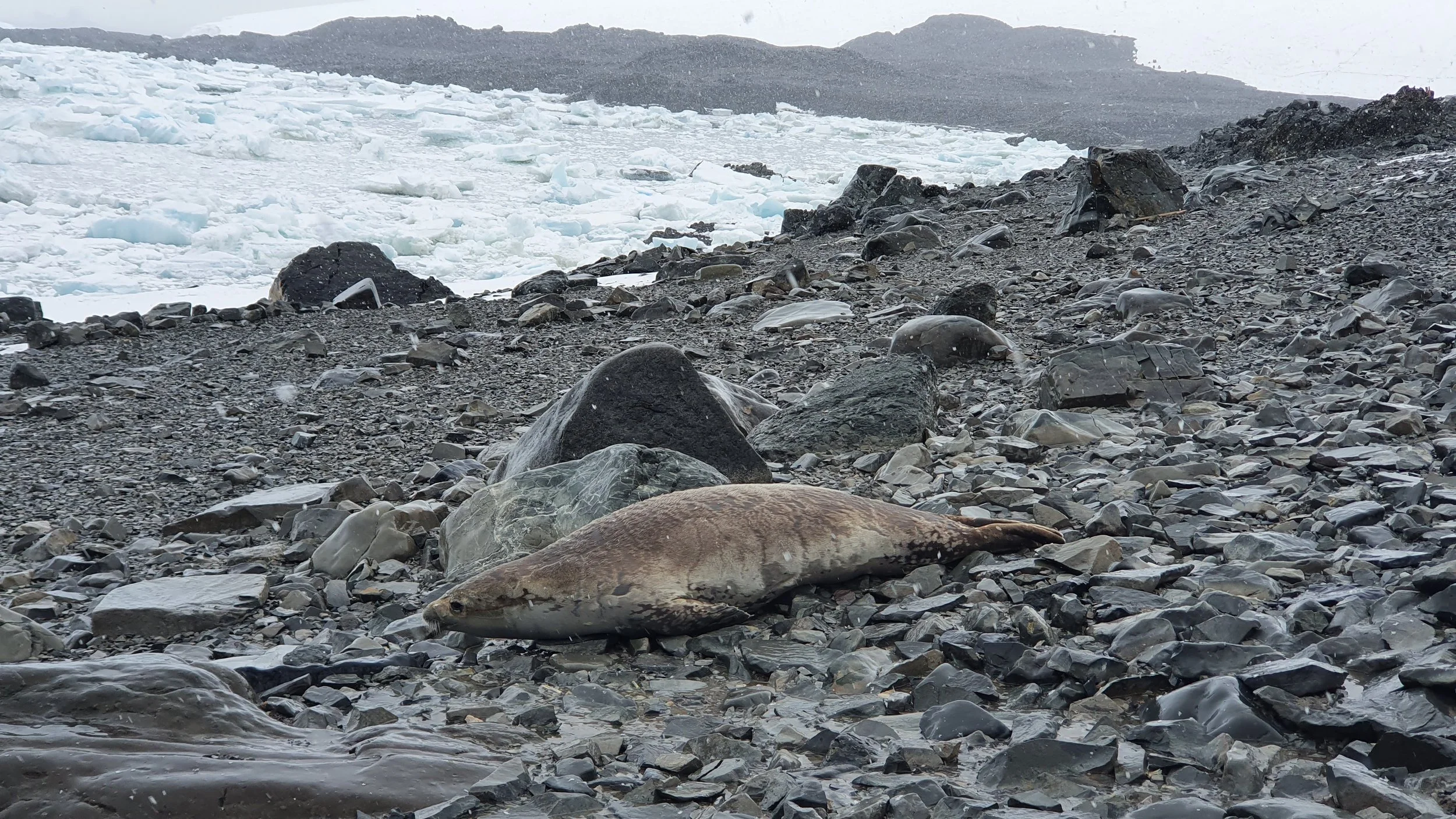
The best seal is a seal in its natural habitat. The second best is the consortium SEAL that will train a new generation of polar researchers for Sweden between 2026-2029 (most PhD defences likely in 2030). On the picture: A goddamn excellent seal at Esperanza/Hope Bay waiting to be studied by the SEAL folks in the upcoming five years! (my photo from 2020).
This autumn’s application race is starting to bear fruit. Swedish government launched two important national targeted financing calls in polar research where I have been a co-applicant in a large consortium with four other important polar research environments in this country. This week brought us happy news: our application for a Swedish polar research school has received funding.
The consortium SEAL—bringing together Göteborg University, Uppsala University, KTH Royal Institute of Technology, Chalmers University of Technology and Mid Sweden University—has secured national funding from the Swedish Research Council to launch a four‑year research school in polar studies. Starting in 2026, the school will train a cohort of PhD candidates across the natural sciences, engineering, humanities and social sciences, fostering interdisciplinary collaboration on Arctic and Antarctic challenges.
In a truly interdisciplinary setup, SEAL engages in new integrated polar research through joint transdisciplinary courses and doctoral research projects hosted at the partner institutions, each of whom has its own fields of expertise. Göteborg University combines expertise in polar oceanography and ecology with modelling to address sea-level rise and ecosystem shifts. Uppsala contributes competence in glaciology, hydrology and climate modelling, offering possibilities to link ice dynamics with governance or risk assessment. Chalmers adds advanced capabilities in radar remote sensing, AI and sensor development that can be integrated with social science perspectives on Arctic infrastructure or shipping. MIUN provides research in sustainable tourism, Indigenous studies, and polar law, which can be linked with natural science to examine land-use conflicts and community-based monitoring. Most importantly, the consortium will address both Antarctic and Arctic challenges.
I have been the co-applicant on behalf of KTH and its Division of History of Science, Technology and Environment. KTH will lead the polar humanities component, offering courses on polar geopolitics, science‑diplomacy and the ethics of working with Arctic stakeholders. A particular focus is to equip emerging scholars with the skills they need to contribute to Sweden’s presence in science diplomacy fora and decision-making.